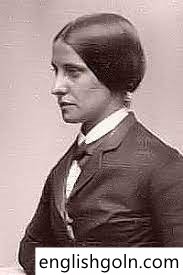
The Requital, Adelaide Anne Procter was born on the 30th October 1825 in the fashionable Bloomsbury area of London. Home was a literary haven; her father was the poet “Barry Cornwall” aka Bryan Waller Procter . Many others seemed to treat the Procter household as their own so it seemed inevitable that Adelaide would grow up with strong literary influences. Her eventual fame as a poet did not sit easily with her modest demeanour and she did not care to hear that her fame was greater than her famous father’s. In a typical riposte she said: “Papa is a poet. I only write verses.”
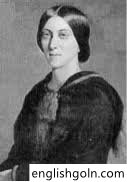
She started writing poetry as a teenager, her first poem being Ministering Angels which was published in Heath’s Book of Beauty in 1843. She then submitted work to Charles Dickens hoping for publication in his own periodicals All the Year Round and Household Words. To ensure that he showed her no favouritism, being a friend of her father’s, she used the pseudonym “Mary Berwick”. Dickens published great quantities of her work, most of which was eventually published in her book Legends and Lyrics.
The Requital by Adelaide Procter
The Requital
Fast fell the sleet;
A little Child Angel
Passed down the street,
With trailing pinions
And weary feet.
No stars were bright;
So she could not shelter
In heaven that night,
For the Angels’ ladders
Are rays of light.

At each windowpane,
And pleaded for shelter,
But all in vain;—
“Listen,” they said,
“To the pelting rain!
And mirth grew higher,
“Give me rest and shelter
Beside your fire,
And I will give you
Your heart’s desire.
His embers gleam,
While his heart was floating
Down hope’s bright stream;
…So he wove her wailing
Into his dream.The worker toil’d on,
For his time was brief;
Her own pale grief;
They heard not the promise
That brought relief.
Rose than before,
When the Angel paus’d
At a humble door,
And ask’d for shelter
And help once more.
Pale, worn, and thin,
With the brand upon her
Of want and sin,
Heard the Child Angel
And took her in:
And did her best
To dry her pinions;
And made her rest
With tender pity
Upon her breast.
Grew bright and red,
Up the first sunbeam
The Angel fled;
Having kiss’d the woman
And left her—dead.