The Origin Of Song Writing,At a time in history when female published writers were very rare, Anna Laetitia Barbauld stood out with her English Romantic style of writing poetry. She also produced a number of essays, including works on political subjects, and was a noted children’s author.
She was certainly outspoken, even into her late sixties, and she fell foul of literary society when she published a poem called Eighteen Hundred and Eleven which, at the time of the Napoleonic wars, was derided as unpatriotic. She basically saw England as a post-war ruin and she protested vehemently about the British involvement in the war. The reviews of this poem were so vicious that she decided to lay down her pen for the rest of her life.
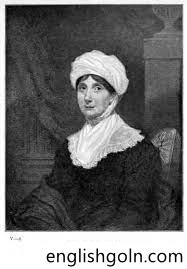
The Origin Of Song Writing by Anna Laetitia Barbauld
His wings unfledg’d, and rude his tongue,He loiter’d in Arcadian bowers,
And hid his bow in wreaths of flowers;
Or pierc’d some fond unguarded heart,
With now and then a random dart;
And love was but a shepherd’s toy:
When Venus, vex’d to see her child
Amidst the forests thus run wild,
Would point him out some nobler game,
She seiz’d the boy’s reluctant hand,
And led them to the virgin band,
Where the sister muses round
Swell the deep majestic sound;
Breathing chaste, severe delight:
Songs of chiefs, and heroes old,
In unsubmitting virtue bold;Of even valour’s temperate heat,
And toils to stubborn patience sweet;
Of nodding plumes, and burnish’d arms,
Resistless thro’ the glowing heart;
Of power to lift the fixed soul
High o’er fortune’s proud controul;
Kindling deep, prophetic musing;
Scorn, and unconquerable hate
Of tyrant pride’s unhallow’d state.
The boy abash’d, and half afraid,
Beheld each chaste immortal maid:
Mars stood by with threat’ning air;And stern Diana’s icy look
With sudden chill his bosom struck.Daughters of Jove receive the child,
The queen of beauty said, and smil’d:
(Her rosy breath perfum’d the air,

Relenting nature learnt to languish,
And sicken’d with delightful anguish; )
Receive him, artless yet and young;
Refine his air and smooth his tongue;
Enrich’d with fair perennial flowers,
To solemn shades and springs that lie
Remote from each unhallow’d eye;
Teach him to spell those mystic names
To reach coy learning’s lofty seat.Ah, luckless hour! mistaken maids!
When Cupid sought the Muses shades :
Of their sweetest notes beguil’d,
By the sly insidious child,
Twice ten thousand times to wound.
Now no more the slacken’d strings
Breathe of high immortal things,
But Cupid tunes the Musis lyre,
In every clime, in every tongue,
‘Tis love inspires the poet’s song.
Hence Sappho’s soft infectious page;
Monimia’s woe; Othello’s rage;
The garland bless’d with many a vow,
For haughty Sacharissa’s brow;
And wash’d with tears the mournful verse
That Petrarch laid on Laura’s herse.But more than all the sister quire,
Here sovereign Cupid reign’d alone;
Music and song were all his own.
Sweet as in old Arcadian plains,
The British pipe has caught the strains:
Or Lissy rolls her limpid tides,
Or Thames his oozy waters leads
Thro’ rural bowers or yellow meads,
With many an old romantic tale
Deceiv’d the tiresome summer-day.
‘Tis yours to cull with happy art
Each meaning verse that speaks the heart;
And fair array’d, in order meet,
To lay the wreath at beauty’s feet.
