On A Portrait, At a time in history when female published writers were very rare, Anna Laetitia Barbauld stood out with her English Romantic style of writing poetry. She also produced a number of essays, including works on political subjects, and was a noted children’s author. She was certainly outspoken, even into her late sixties, and she fell foul of literary society when she published a poem called Eighteen Hundred and Eleven which, at the time of the Napoleonic wars, was derided as unpatriotic.
She basically saw England as a post-war ruin and she protested vehemently about the British involvement in the war. The reviews of this poem were so vicious that she decided to lay down her pen for the rest of her life.
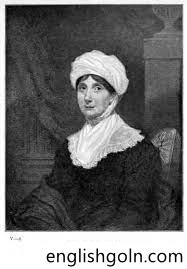
On A Portrait by Anna Laetitia Barbauld
Blest art! What magic powers with thine may vie,
That brings (too seldom seen) a Brother nigh?
That gives, by colours into canvass wrought,
The hue of sentiment, and tinge of thought?
The lips, with soft affection’s smile that glow,
And the mild wisdom of the studious brow?
I look, again I look, and still ’tis there;
I catch, with varying lights, a happier air;
That brings (too seldom seen) a Brother nigh?
That gives, by colours into canvass wrought,
The hue of sentiment, and tinge of thought?
The lips, with soft affection’s smile that glow,
And the mild wisdom of the studious brow?
I look, again I look, and still ’tis there;
I catch, with varying lights, a happier air;

Approach, step back, the favouring distance choose,
And, line by line, the well known face peruse:
Almost expect the opening lips to pour
With usual flow the treasured mental store,
And fondly dream our meeting glances prove
The’ accustomed beamings of fraternal love.
But O! should fate in some disastrous day,—
Avert it Heaven!—the living form decay;
Hide, hide, ye pitying friends, the mimic light,
Veil, veil the image from my tortured sight;
The shadow of past joys I could not bear,
Nor would it speak of comfort, but despair
And, line by line, the well known face peruse:
Almost expect the opening lips to pour
With usual flow the treasured mental store,
And fondly dream our meeting glances prove
The’ accustomed beamings of fraternal love.
But O! should fate in some disastrous day,—
Avert it Heaven!—the living form decay;
Hide, hide, ye pitying friends, the mimic light,
Veil, veil the image from my tortured sight;
The shadow of past joys I could not bear,
Nor would it speak of comfort, but despair
