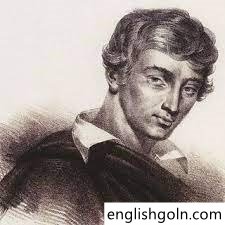
Bakhcisaray, Adam Bernard Mickiewicz was born in December 1798 into a family of minor Polish nobility known as the szlachta. Their status allowed them to bear the hereditary Poraj coat of arms. The family lived on a grand estate in Zaosie, near Navahrudak. This was within the Russian Empire on the outskirts of Lithuania. Its modern day location is Belarus. Just to illustrate the political instability of this area, it had previously been a part of the Grand Duchy of Lithuania, the Polish-Lithuanian Commonwealth and then Belarus. Much of Mickiewicz’s writing had Belarusian and Lithuanian folklore influences.

He had a good education and studied at the Imperial University of Vilnius. It was here that his political activities began when he and a group of friends formed a secret society called the Philomaths. Their aims were clear and unequivocal – total independence from the Russian Empire. On graduation he became a teacher at a secondary school in Kaunas but he continued with his membership of the Philomaths and, in 1823, the authorities arrested him and he was banished to central Russia as a punishment.
Bakhcisaray by Adam Mickiewicz
Bakhcisaray
Are galleries where desolation falls;
Those varicolored domes, those crumbling halls
Where proud pashas upon rich divans sate:
Here now the locust leaps, the serpent crawls,
And bindweed Ruin writes, as on the walls
The hand of doom once traced Belshazzar’s fate.

The harem waters still unbroken stands,
Which shedding pearly fears, ‘neath shattered panes,
Cries: ,,Where are ye, O Glory, Love, and Gold?
You should endure, while streams waste into sands.
O shame, ye pass – the agelles sprong remains!”