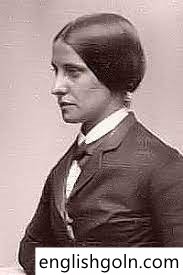
A Womans Question, Adelaide Anne Procter was born on the 30th October 1825 in the fashionable Bloomsbury area of London. Home was a literary haven; her father was the poet “Barry Cornwall” aka Bryan Waller Procter . Many others seemed to treat the Procter household as their own so it seemed inevitable that Adelaide would grow up with strong literary influences. Her eventual fame as a poet did not sit easily with her modest demeanour and she did not care to hear that her fame was greater than her famous father’s. In a typical riposte she said: “Papa is a poet. I only write verses.”
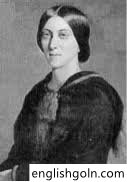
She started writing poetry as a teenager, her first poem being Ministering Angels which was published in Heath’s Book of Beauty in 1843. She then submitted work to Charles Dickens hoping for publication in his own periodicals All the Year Round and Household Words. To ensure that he showed her no favouritism, being a friend of her father’s, she used the pseudonym “Mary Berwick”. Dickens published great quantities of her work, most of which was eventually published in her book Legends and Lyrics.
A Womans Question by Adelaide Procter
A Womans Question
Or place my hand in thine,
Before I let thy future give
Color and form to mine,
Before I peril all for thee, question thy soul to-night for me.I break all slighter bonds, nor feel
A shadow of regret:
That holds thy spirit yet?
Or is thy faith as clear and free as that which I can pledge to thee?Does there within thy dimmest dreams
A possible future shine,
Wherein thy life could henceforth breathe,
Untouch’d, unshar’d by mine?

Within thy inmost soul,
That thou hast kept a portion back,
While I have stak’d the whole;
Let no false pity spare the blow, but in true mercy tell me so.
That mine cannot fulfil?
One chord that any other hand
Could better wake or still?
The demon-spirit Change,
Shedding a passing glory still
On all things new and strange?
And answer to my claim,
That Fate, and that to-day’s mistake—
Not thou—had been to blame?
The words would come too late;
Yet I would spare thee all remorse,
So, comfort thee, my fate—
Whatever on my heart may fall—remember, I would risk it all!