Riddle 2,At a time in history when female published writers were very rare, Anna Laetitia Barbauld stood out with her English Romantic style of writing poetry. She also produced a number of essays, including works on political subjects, and was a noted children’s author.
She was certainly outspoken, even into her late sixties, and she fell foul of a literary society when she published a poem called Eighteen Hundred and Eleven which, at the time of the Napoleonic wars, was derided as unpatriotic. She basically saw England as a post-war ruin and she protested vehemently about the British involvement in the war. The reviews of this poem were so vicious that she decided to lay down her pen for the rest of her life.
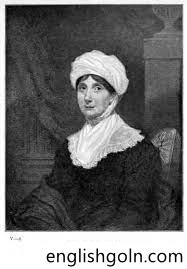
Riddle 2 by Anna Laetitia Barbauld
This creature, though extremely thin,
In shape is almost square;
Has many heads, on which ne’er grew
One single lock of hair.
Yet several of their tribe there are,
Whose case you must bewail,
Of whom in truth it may be said
They ‘ve neither head nor tail.
In purer times, ere vice prevailed,
They met with due regard,
The wholesome counsels that they gave,
With reverence were heard.
In shape is almost square;
Has many heads, on which ne’er grew
One single lock of hair.
Yet several of their tribe there are,
Whose case you must bewail,
Of whom in truth it may be said
They ‘ve neither head nor tail.
In purer times, ere vice prevailed,
They met with due regard,
The wholesome counsels that they gave,
With reverence were heard.

To marriages and funerals
Their presence added grace,
And though the king himself were by,
They took the highest place.
Their business is to stir up men
A constant watch to keep;
Instead of which,—O sad reverse,—
They make them fall asleep.
Not so in former times it was,
Howe’er it came to pass;
Though they their company ne’er left
Till empty was the glass.
The moderns can’t be charged with this,
But may their foes defy,
To prove such practices on them,
Though they ‘re extremely dry.\
Their presence added grace,
And though the king himself were by,
They took the highest place.
Their business is to stir up men
A constant watch to keep;
Instead of which,—O sad reverse,—
They make them fall asleep.
Not so in former times it was,
Howe’er it came to pass;
Though they their company ne’er left
Till empty was the glass.
The moderns can’t be charged with this,
But may their foes defy,
To prove such practices on them,
Though they ‘re extremely dry.\
