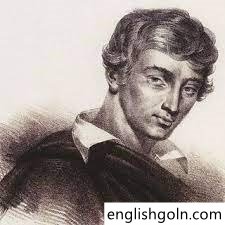
The Pilgrim, Adam Bernard Mickiewicz was born in December 1798 into a family of minor Polish nobility known as the szlachta. Their status allowed them to bear the hereditary Poraj coat of arms. The family lived on a grand estate in Zaosie, near Navahrudak. This was within the Russian Empire on the outskirts of Lithuania. Its modern day location is Belarus. Just to illustrate the political instability of this area, it had previously been a part of the Grand Duchy of Lithuania, the Polish-Lithuanian Commonwealth and then Belarus. Much of Mickiewicz’s writing had Belarusian and Lithuanian folklore influences.

He had a good education and studied at the Imperial University of Vilnius. It was here that his political activities began when he and a group of friends formed a secret society called the Philomaths. Their aims were clear and unequivocal – total independence from the Russian Empire. On graduation he became a teacher at a secondary school in Kaunas but he continued with his membership of the Philomaths and, in 1823, the authorities arrested him and he was banished to central Russia as a punishment.
The Pilgrim by Adam Mickiewicz
The Pilgrim
A fair face by me, heavens where white clouds sail,
Why does my heart forever still bewail
Far-distant lands, more distant days of old?
Litwa! your roaring forests sang more bold
Than Salhir maid, Baydary nightingale;

Of mulberries, and pineapples of gold.
Here are new pleasures, and I am so far!
Why must I always sigh distractedly
For her I loved when first my morning star
Arose? In that dear house I may not see,
Where yet the tokens of her lover are,
Does she still walk my ways and think of me?